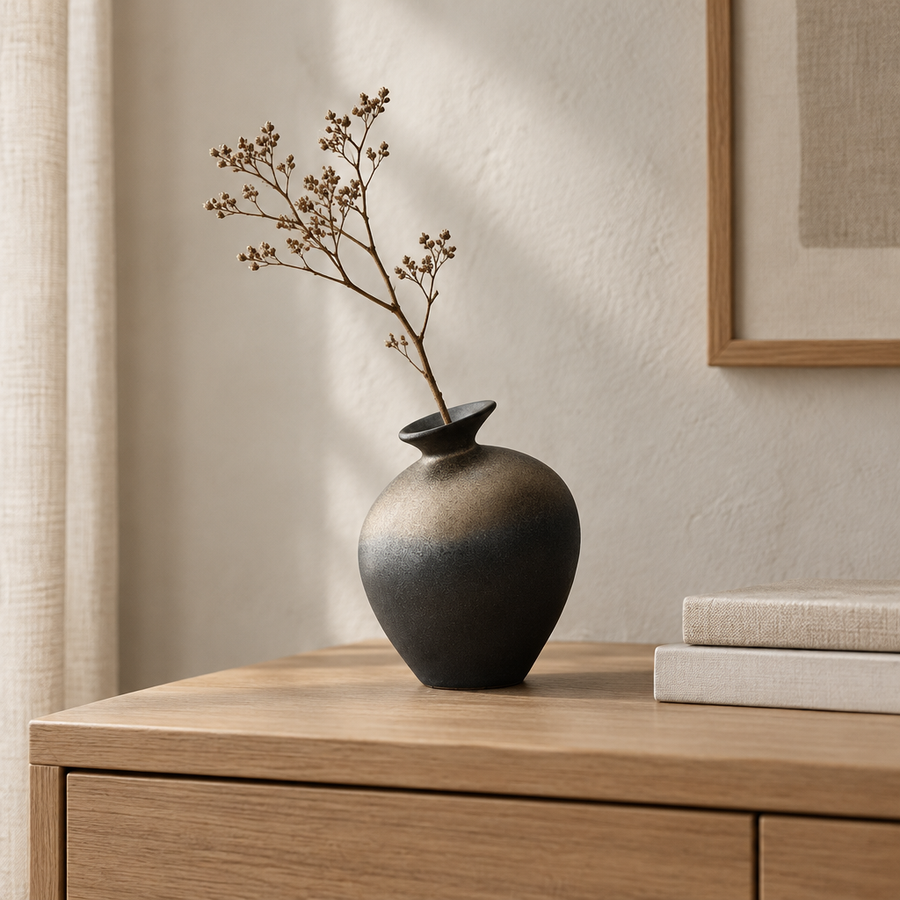
Dried flowers
How to arrange dried flowers in a vase

To arrange dried flowers in a vase, choose stems about one and a half to two times the height of the vase, put in the tallest, most structural stems first, then add fillers and finish with one or two focal flowers, keeping the shape loose and a little uneven. A narrow neck holds a few stems upright on its own; a wide mouth needs more stems or some support inside. Here is how to choose the stems, match them to the vase and keep them looking good for months.
Choosing your stems
Most good arrangements use three kinds of stem.
Structure gives the arrangement its height and line: branches, grasses and tall plumes. Eucalyptus, beech or oak leaves, palm spears, bracken, pampas grass and bunny tail grass all work, as do bare twigs from the garden.
Filler softens the gaps: gypsophila, sea lavender, statice, broom bloom and lavender.
Focal stems draw the eye: dried roses, hydrangea heads, protea, strawflowers, thistles, and seed heads such as poppy, nigella or honesty with its papery silver discs.
You do not need all three. One kind of grass on its own looks calm and modern, and a single branch can be the whole arrangement.
In the UK, late summer and early autumn are the time to dry your own. Hydrangea heads left on the plant until they feel papery, lavender, honesty, grasses and seed heads all dry well. Tie them in small bunches and hang them upside down somewhere dry, dark and airy for two to three weeks. Preserved stems, treated so they stay supple, are a good alternative for eucalyptus and ruscus.
Getting the proportions right
The simplest rule is that the arrangement should stand about one and a half to two times the height of the vase. A 20 cm vase suits stems that reach 30 to 40 cm above the table. In a very tall vase, a single long branch can go higher still.
Let the width follow the vase. A low, wide vessel suits a low, spreading arrangement; a tall, slim bottle suits one or two stems standing up.
Work in odd numbers, three, five or seven of each kind of stem, and vary their heights. Stems all cut to the same length look stiff.
Narrow necks and wide mouths
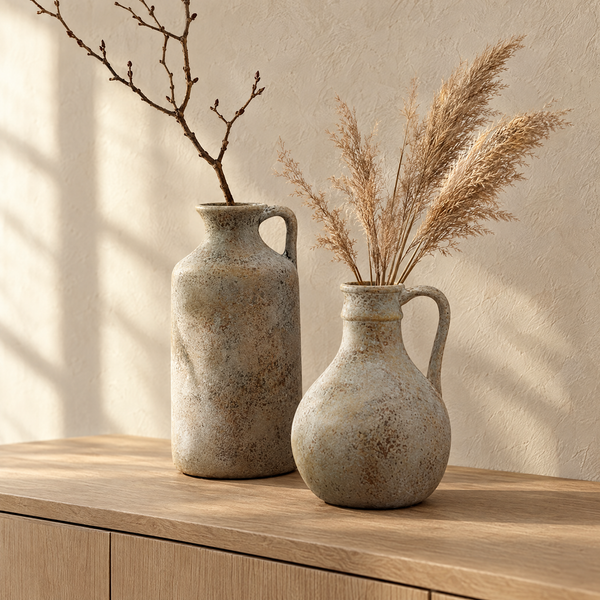
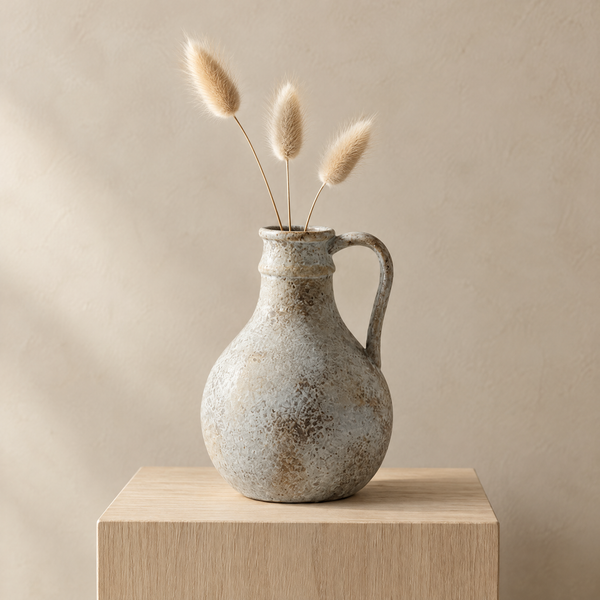
The opening of the vase decides how much help the stems need. A narrow neck holds stems at an angle by itself, so three or four are enough. The round Bizen ceramic jug vase narrows to a 5.5 cm opening that keeps a few dried stems upright on their own, while the tall jug, straight sided with a 7.2 cm opening, is made for one long branch.
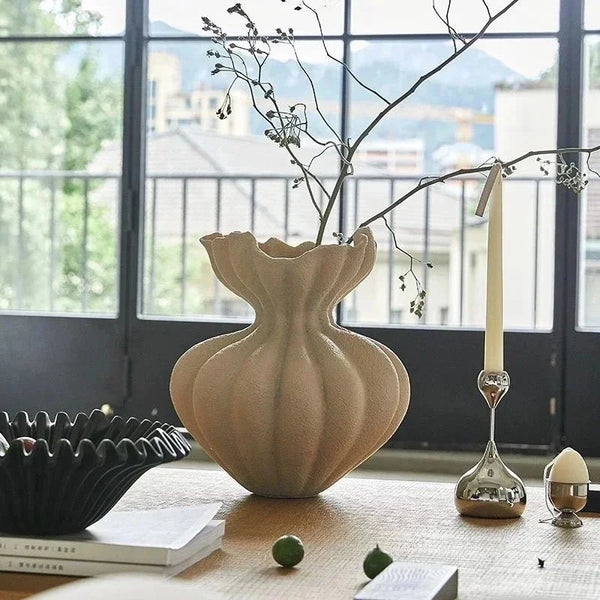
A wide mouth lets stems flop to the sides. Either fill it generously, so the stems hold each other up, or add support inside: a loose ball of chicken wire, a pin holder (kenzan) or a bundle of scrunched brown paper. The Kutani fluted ceramic vase is about 25 cm tall with an opening about 17 cm across and a ruffled rim, made for a generous handful of dried grasses, pampas or branches.
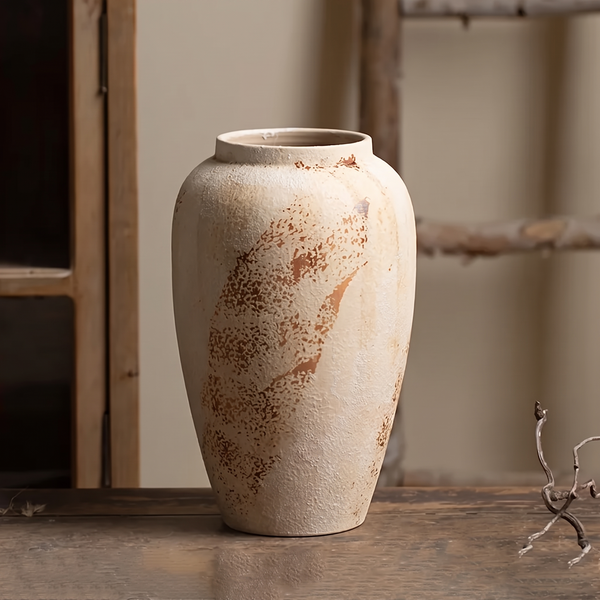
Between the two, the Kurama rustic ceramic vase has an opening of about 10 cm on all three sizes, 20, 29 or 34 cm tall, with a rough off white surface and brown mottling. It suits pampas, dried stems and bare branches.
Step by step
Lay the stems out on a table, strip off any leaves that would sit below the rim, and cut each stem at an angle with sharp secateurs. Cut longer than you think; you can always take more off.
Put the structure in first. Place the tallest stems slightly off centre and at slightly different heights, leaning outwards a little. Add the fillers next, lower down, to fill gaps and hide the rim. Finish with the focal stems at different depths, some forward and some tucked in.
Step back, turn the vase round and look again. If it feels busy, take one stem out. Dried stems are brittle, so hold them low down near the cut end.
The single stem
One stem in a small vase is the easiest arrangement and often the most striking. Look for a stem with a good line: a curving branch, a single grass head or one seed pod on a long stalk. Set it slightly off centre and let it lean.
The Ena low kiln glazed bud vase is about 15 cm across and 7 cm tall, with a 2.7 cm neck that holds one branch upright, in five reactive glazes. The Shino stoneware bud vases are made for one stem, as rounded jars about 14 cm tall or low pebbles about 7 cm tall. The Okinawa coral form vase is wider than it is tall, with folded layers like a sea fan and a small round opening for a single dried stem or a few pampas plumes.
Ikebana inspired arrangements
Ikebana, the Japanese art of arranging flowers, works with line, space and asymmetry rather than abundance. You do not need formal training to borrow its ideas.
Start with three stems of different lengths: a tall main stem, a second about two thirds of its height and a short third stem. Set them leaning in different directions from one point, forming an uneven triangle, and leave plenty of empty space around them. The space is as much part of the arrangement as the stems. A low, wide vessel with a pin holder suits this style, as does a narrow necked bud vase. Our guide What is Japandi style? explains why this restraint suits a calm room.
Which vases hold water
Dried flowers need no water, which is why many matte and textured ceramics are sold for dried stems only. Their dry finishes can let water seep through or leave marks, so check before you use one for fresh flowers.
Of our vases, the Bizen jug vase is not sold as watertight, and we do not recommend filling the Mashiko rustic jar vase with water, as its distressed surface is dry and porous. The Tamba bottle vases, the Chino bottle vases, the Tanabe interlocking vases, the Kutani and the Shino are all made or sold for dried stems, and the makers do not state that they are watertight. The Onta stoneware vases are best with dried flowers and branches too. If you want fresh flowers in any of these, stand a glass, a jar or a small glass tube inside to hold the water.
Some can take water. The Numazu ice texture glass vase is a sealed glass cylinder, so fresh flowers go straight in. The Kuroishi ceramic vase is glazed and can hold water for fresh stems, and the Ena holds a little water too; empty and dry both between uses. The Nikko wooden bud vase holds a removable glass tube for water and a single stem.
Caring for dried flowers
Keep dried flowers out of direct sunlight, which fades their colour within weeks, and away from steam. In a bathroom or beside the kettle they go limp and can turn mouldy. Very dry heat beside a radiator makes them brittle.
Dust them every few weeks. A hairdryer on its cool, low setting, held about 30 cm away, blows dust out without damage; a soft make up brush or feather duster works for sturdier stems. A light mist of unscented hairspray helps pampas and grasses shed less.
Most dried arrangements look good for six months to a year. When the colour has faded, change the stems with the season and keep the vase.
See all our vases in vases and ceramics.
Questions
How many dried stems do I need for a vase?
For a narrow necked vase, three to five stems are often enough. A medium vase with a 10 cm opening usually takes ten to fifteen mixed stems, and a wide mouthed vase more again, unless you add chicken wire or a pin holder inside.
How do you keep dried flowers in place in a vase?
Choose a vase with a narrow neck, or put a ball of chicken wire, a pin holder or scrunched paper inside a wide one. Packing stems closely also helps them hold each other upright.
How long do dried flowers last?
Usually six months to a year, and often longer if they are kept out of direct sun and away from damp. Colours fade gradually, but the shapes last.
Can I put dried flowers in a vase that is not watertight?
Yes. Dried flowers need no water at all, so any vase works. It is only fresh flowers that need a watertight vase or a liner inside.
The pieces in this guide
Everything named above, with the price on it. Free delivery, tracked to your door, and the delivery window stated before you pay.