Care guide
How to make matcha with a bamboo whisk, and how to care for your chasen

To make matcha with a bamboo whisk, sift about 2 g of matcha (roughly a level teaspoon, or two scoops with a bamboo chashaku) into a warmed bowl, add around 70 ml of water at 70 to 80°C, then whisk briskly from the wrist in a quick zigzag for 15 to 30 seconds until the surface is covered in fine froth. Soak the whisk for a minute before you start and rinse it in plain water afterwards. Below is each step in more detail, followed by how to look after the whisk so it lasts.
What you need
A wide bowl, called a chawan, gives the whisk room to move. A mug or a narrow cup will not work, because you cannot make the fast side to side strokes that create the froth. You also need a bamboo whisk, called a chasen; a bamboo scoop, called a chashaku; a fine sieve; and a kettle.
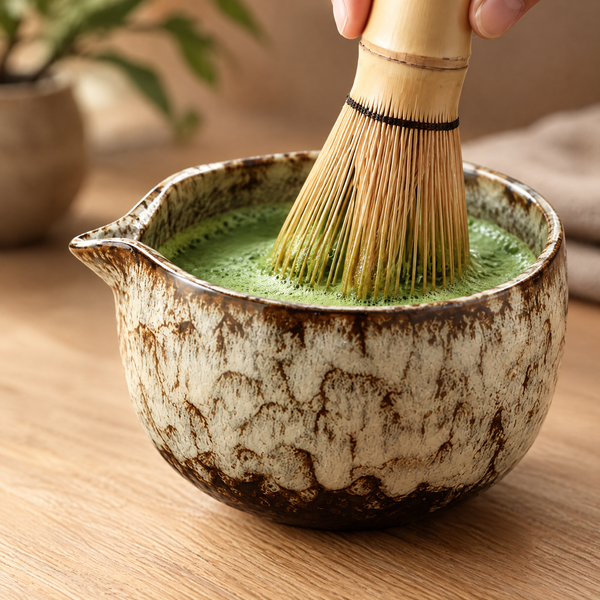
Our Uji matcha ceremony set has all of this in one box: a drip glazed ceramic bowl 13 cm across, with a spout so you can pour into a cup if you prefer, a bamboo whisk, a matching ceramic whisk holder, a curved bamboo scoop, a bamboo spoon and a fine stainless steel sieve. The matcha itself is not included.
Choosing matcha
For drinking with water, buy matcha labelled ceremonial grade, or the best drinking grade you can afford. It is made from younger leaves, tastes smoother and less bitter, and whisks into a better froth. Culinary grade is fine for lattes and baking, where milk and sugar soften its sharper flavour.
Good matcha is a vivid, fresh green. A dull olive or brownish colour means the tea is old, has been badly stored or is a lower grade. Buy small tins rather than large bags, because matcha starts to lose its flavour once it is opened.
Step 1: soak the whisk and warm the bowl
Pour hot water into the bowl and stand the whisk in it, tines down, for a minute or so. A dry whisk is stiff, and its fine tines are more likely to snap; the warm water softens the bamboo so it flexes as you whisk. It also warms the bowl, so the tea stays hot for longer.
Lift out the whisk, tip the water away and wipe the bowl dry with a cloth. Any water left in the bottom will make the powder clump.
Step 2: sift the matcha
Matcha is a very fine powder that clumps easily, and a whisk cannot break up lumps once water is added. Hold the sieve over the bowl, add about 2 g of matcha and press it through with the scoop or the back of a spoon. This takes a few seconds and makes the biggest single difference to a smooth, frothy bowl.
Step 3: add water at the right temperature
Water for matcha should be between 70 and 80°C, well below boiling. Water straight off the boil scorches the tea and brings out bitterness. Without a thermometer, boil the kettle, pour the water into a separate jug or cup and leave it for a few minutes; every pour from one vessel to another takes the temperature down.
For usucha, or thin tea, which is the everyday way to drink matcha, use about 60 to 80 ml of water. Some people like to add a small splash first and work the powder into a smooth paste with the whisk, then add the rest.
Step 4: whisk
Hold the bowl steady with one hand. Hold the whisk upright with the other, with the tines just touching or barely above the bottom of the bowl. Then whisk quickly back and forth across the bowl in a zigzag, like writing the letter M or W, moving from the wrist rather than the whole arm. Do not stir in circles; circles mix the tea but do not froth it.
After 15 to 30 seconds the surface will be covered in foam. Raise the whisk slightly so the tines are working near the surface, and make a few slower, lighter strokes to break up any larger bubbles into a fine, even froth. To finish, draw the whisk to the centre of the bowl and lift it straight out.
Step 5: drink it straight away
Matcha is a suspension rather than a solution, so the powder starts to settle within a few minutes. Drink it soon after whisking, holding the bowl in both hands, or pour it into a cup if your bowl has a spout like the Uji. For a matcha latte, whisk the tea with a little less water, then pour in warm milk.
Thick matcha, or koicha
Koicha is the thick tea served at the heart of a formal tea ceremony. It uses about twice as much matcha and much less water, roughly 4 g to 30 or 40 ml, and it is kneaded slowly with the whisk into a smooth, glossy liquid rather than whisked to a froth. It needs the highest grade of matcha, because any bitterness is concentrated.
How to care for the chasen
A chasen is carved from a single piece of bamboo split into many fine tines, and it needs a little care to keep its shape. Pressing it hard against the bottom of the bowl while whisking wears the tines quickly, so keep your strokes light.
Rinse it straight away. As soon as you finish, rinse the whisk under warm running water, then swish it through a bowl of clean warm water until no green remains. Do not use soap or washing up liquid, as bamboo absorbs it and the taste comes through in the next bowl. Never put a chasen in the dishwasher, and do not leave it soaking.
Reshape the tines. Gently shake off the water and check the tines. If any have bent inwards, ease them back into place with your fingers while the bamboo is still damp and flexible.
Dry it on a holder. A whisk holder, called a kusenaoshi, is a small ceramic shape that the whisk sits over, tines down. It holds the tines in their curve while they dry and lets air reach the inside of the whisk. The Uji set includes one; stand the whisk on it after every use so the tines dry in shape.
Let it dry completely. Leave the whisk in the open air until it is fully dry, and never put it away damp in a closed box or a drawer, where it can grow mould. Keep it out of direct sun and away from heat, which make bamboo brittle.
Know when to replace it. A few broken tines are normal, and the bamboo darkens slightly with use. Once several tines have snapped, the whisk has lost its shape, or you see any spots of mould, it is time for a new one. Used every day, a chasen will typically last a few months.
Storing matcha
Light, air, heat and moisture all dull matcha. Keep it sealed in its original tin or pouch, in a cool, dark cupboard. Many people keep an opened tin in the fridge; if you do, let it come to room temperature before opening, so no condensation forms inside. Aim to use it within a month or two of opening.
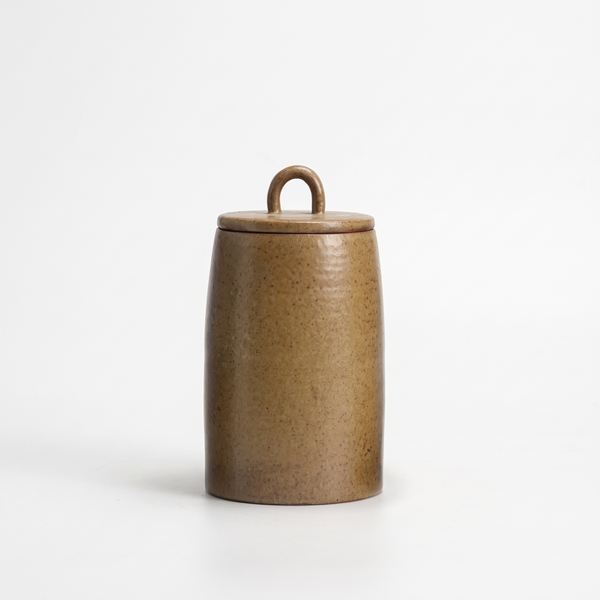
For loose leaf tea alongside, a heavy lidded jar keeps out the light. Our Kanuma stoneware tea caddy is thick stoneware with a snug lid and a looped handle, and looks good left out beside the kettle. To keep the whole matcha set together on a shelf or carry it to the table, a plain tray such as the Arashiyama bamboo tray, with its low sides and cut out handles, is ideal.
If you also drink loose leaf tea from a pot, our guide to using and caring for a cast iron teapot covers that side of things. You can see bowls, cups and teapots in our teapots and tea sets collection.
The pieces in this guide
Everything named above, with the price on it. Free delivery, tracked to your door, and the delivery window stated before you pay.