Bedding
Linen vs cotton bedding: which is better?

Linen bedding is more breathable, better at handling moisture and longer lasting than cotton, and it gets softer with every wash, but it creases readily and costs more. Cotton is smoother, cheaper and crease resistant, and it comes in more weaves, from crisp percale to warm brushed cotton. If you sleep hot or love a relaxed, rumpled bed, choose linen; if you want a smooth, neat bed on a smaller budget, choose cotton.
Linen and cotton at a glance
| Linen | Cotton | |
|---|---|---|
| Made from | Flax plant stems | Cotton plant seed fibres |
| Feel | Textured, softens over time | Smooth from the start |
| Breathability | Excellent | Good, best in percale |
| Warmth | Cool in summer, comfortable in winter | Depends on weave; brushed cotton is warm |
| Creasing | Creases easily | Creases less |
| Lifespan | Very long, with care | Long, depending on quality |
| Cost | Higher | Lower |
How they feel
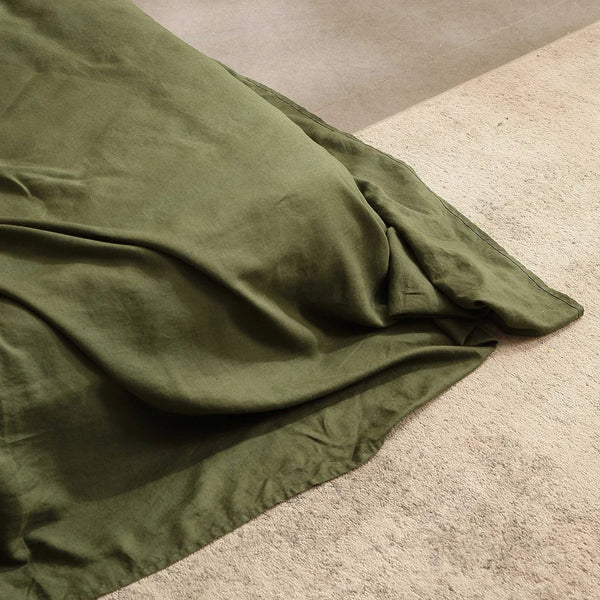
Linen is woven from the long fibres inside the stem of the flax plant. It has a slightly dry, textured feel, with natural slubs in the weave that you can see and feel. New, unwashed linen can feel stiff, which is why most linen bedding is now washed or stonewashed before it is sold. Washed linen feels soft and relaxed from the first night, and it keeps softening over years of use.
Cotton is made from the soft fibres around the seed of the cotton plant, and it is smooth to the touch from the start. How it feels depends on the weave. Percale is a plain, matte weave that feels crisp and cool, like a hotel sheet. Sateen has a silky sheen and drapes closely. Brushed cotton has a fluffy surface that feels warm on a cold night. Washed cotton sits somewhere between, soft with a gentle crease.
Warmth and breathability
This is where linen stands out. Flax fibres are naturally breathable and very good at absorbing moisture and letting it evaporate, so linen draws heat and dampness away from your skin and feels dry and cool. It suits hot sleepers, people who wake up warm, and summer nights in a stuffy bedroom.
Linen is not only a summer fabric, though. Because it moves moisture away rather than trapping it, it stays comfortable under a warm duvet in winter, without the clammy feeling some people get from synthetic bedding.
Cotton breathes well too, especially in a percale weave. Sateen and brushed cotton hold more warmth, which makes them a good choice for a cold bedroom or anyone who feels the cold.
Creasing
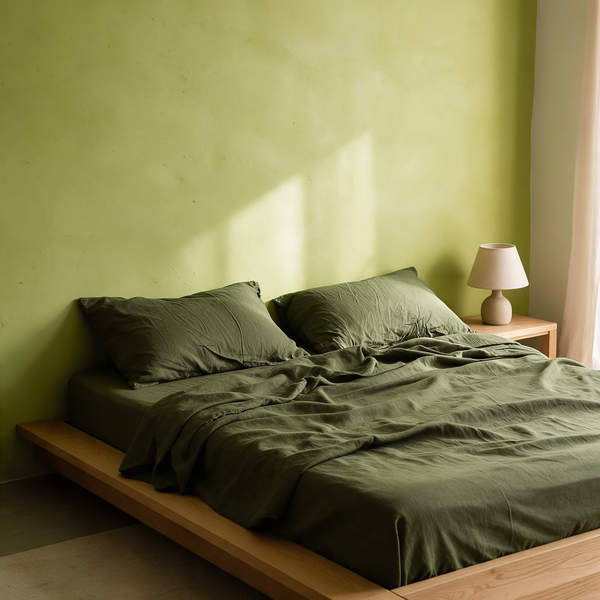
Linen creases. There is no way around it, and it is part of the look: a linen bed has a soft, rumpled texture that looks relaxed and lived in. If you like a smooth, pressed bed, you will either need to iron linen or accept the creases.
Cotton creases less, and a percale or sateen cotton can be ironed to a smooth, crisp finish. Washed cotton is designed to look softly creased, much like linen but with less texture.
Care and washing
Both linen and cotton are machine washable. Linen is happiest on a gentle 30 or 40 degree wash with a mild detergent, line dried or tumble dried on low and taken out while still slightly damp, then shaken out and put straight back on the bed. Over drying makes it feel stiff. Our guide to washing and caring for linen covers it in detail.
Cotton is a little more forgiving and copes with warmer washes. Whichever you choose, wash new bedding before the first use, and avoid overloading the drum.
How long they last
Linen is one of the strongest natural fibres, and well cared for linen bedding can last many years, getting softer rather than thinner as it ages. It is also less prone to pilling than cotton.
Cotton lifespan depends on the quality of the fibre and the weave. Good long staple cotton lasts well, while cheaper cotton made from short fibres can pill and wear thin sooner.
Cost
Linen costs more than cotton, in our range as elsewhere. Flax takes more work to grow, harvest and process into yarn, and linen is produced in much smaller quantities. Because it lasts so long, the cost per year can come out closer than the price on the label suggests.
Cotton is the better choice if you are on a budget, if you need several sets for spare beds or children's rooms, or if you like to change your bedding colours often.
Thread count and GSM
Cotton bedding is usually described by thread count, but a very high number does not guarantee a better sheet. Fibre quality and weave matter more, and something in the region of 200 to 400 in a good cotton is comfortable for most people. Linen is usually described by weight in grams per square metre, or GSM. Around 150 to 190 GSM is a mid weight that drapes well without feeling heavy.
Our linen bedding
The Ojiya pure linen duvet cover set is a duvet cover and two pillowcases in 100% washed linen at 160 gsm, with a zip and no piping, in natural, charcoal or white. The Kiryu pure linen sheet set gives you a flat sheet, a 35 cm deep fitted sheet and pillowcases in washed linen, and the Nagahama stonewashed linen sheet set is a 150 gsm flat sheet and two pillowcases in natural, white, light grey or sage.
To build a linen bed piece by piece, the Kobayashi linen fitted sheet and Kokubu linen flat sheet are both 100% stonewashed linen, and Kikuchi linen pillowcases come as a pair in six colours with an envelope closure.
Our cotton bedding
The Ainokura washed cotton duvet cover set is 100% cotton, washed for a soft hand and a gentle crease, with ties inside the corners to hold the duvet, in dark grey, khaki, white or light grey. The Hokota striped cotton bedding set is brushed cotton: a butter yellow pinstripe duvet cover with a coffee brown fitted sheet and two pillowcases. And a pair of Honjo washed cotton pillowcases, in gingham, check, stripe or cream, is an easy way to try washed cotton on your own bed.
Can you mix linen and cotton?
Yes, and it is a good way to spread the cost. Many people put the linen where it is felt most, in the pillowcases and the top sheet, and use cotton for the fitted sheet. Others choose a linen duvet cover for the look and cotton sheets for the smooth feel. Our guide on how to style a bed shows how to layer them together, and you can see the full range in linen bedding and throws.
Questions
Is linen or cotton better for hot sleepers?
Linen is usually the better choice. It breathes well and moves moisture away from the skin, so it feels cooler and drier through the night than most cotton.
Is linen bedding warm enough for winter?
Yes. Linen regulates temperature rather than simply cooling, so it is comfortable under a warm duvet in winter. If you feel the cold, add a wool blanket or choose brushed cotton sheets.
Why is linen bedding so expensive?
Flax takes more work to grow and process than cotton, and far less of it is produced. Linen also lasts a long time, so it is worth weighing the price against how many years you will use it.
Does linen bedding get softer?
Yes. Linen softens with every wash, and washed or stonewashed linen is soft from the first night. Avoid over drying it, which can make it feel stiff.
The pieces in this guide
Everything named above, with the price on it. Free delivery, tracked to your door, and the delivery window stated before you pay.