Bedding
How to style a bed: how to layer bedding, step by step

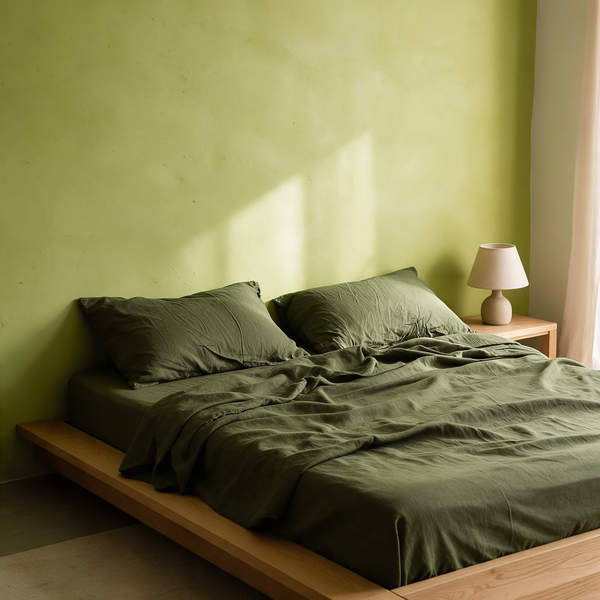
To style a bed, build it in layers from the mattress up: a fitted sheet, an optional flat sheet, the duvet in its cover, a coverlet or bedspread, a throw across the foot, then pillows and a few cushions. Keep the colours in one calm family and vary the textures, and the bed will look finished without looking fussy. Here is how to do each layer, and how to change them with the seasons.
Layer one: the fitted sheet
Everything starts with a fitted sheet that is deep enough for the mattress. Measure the depth of the mattress, plus any topper, and choose a sheet with deeper sides than that, so the elastic tucks right under and the sheet stays smooth through the night. A wrinkled bottom sheet shows at the sides of even the best made bed.
The Kobayashi linen fitted sheet is 100% stonewashed linen with 35 cm deep sides and elastic all the way round, in seven plain colours and in 140 x 200, 150 x 200 and 180 x 200 cm. A plain base in white, oatmeal or ivory is the easiest to layer over, but a darker sheet, such as dark grey or clay, gives a strong line at the edge of the bed.
Layer two: the flat sheet
Many people in the UK skip the flat sheet, but it is worth having. It keeps the duvet cover cleaner for longer, it is a cooler layer on warm nights, and it gives you the neatest finish of all: a band of sheet folded back over the top of the duvet.
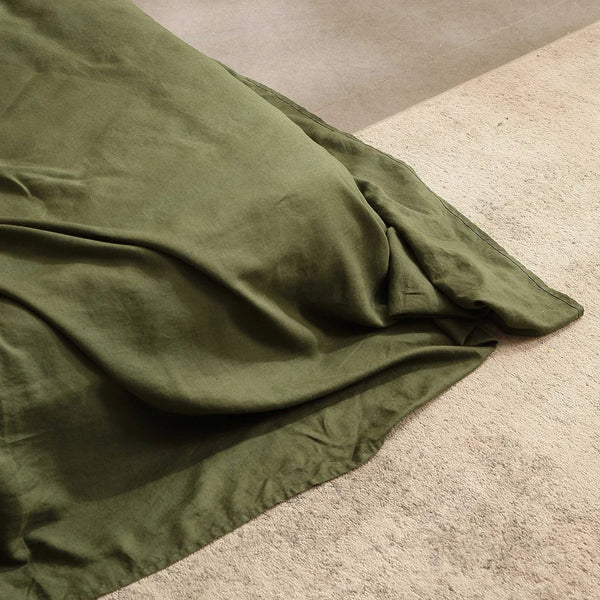
Tuck the flat sheet in at the foot, lay the duvet over it, then fold the top of the sheet back over the duvet by about 30 to 40 cm. The Kokubu linen flat sheet is 100% stonewashed linen with a plain hem, in five colours and four sizes from 150 x 230 to 240 x 260 cm, and the larger sizes are generous enough to drape over the sides of a king. If you would rather buy everything at once, the Kiryu pure linen sheet set includes a flat sheet, a 35 cm deep fitted sheet and pillowcases in washed linen, in olive, caramel or white.
Layer three: the duvet and its cover
The duvet does the real work of keeping you warm, so choose the tog for the season and the room. As a guide, 4.5 tog suits summer, around 10.5 tog suits most of the year in a heated home, and 13.5 tog suits a cold bedroom in winter.
The cover is the largest area of colour on the bed, so it sets the mood. Washed fabrics look relaxed and need no ironing, which suits a calm, natural bedroom. The Ojiya pure linen duvet cover set is a duvet cover and two pillowcases in 100% washed linen at 160 gsm, with a zip, no piping or trims, in natural, charcoal or white. The Ainokura washed cotton duvet cover set is washed 100% cotton with a gentle crease and ties inside the corners to hold the duvet in place, in dark grey, khaki, white or light grey.
If you want a little pattern, the Hokota striped cotton bedding set pairs a butter yellow duvet cover with fine brown pinstripes with a coffee brown fitted sheet, with one pillowcase in each, in brushed cotton.
If you are undecided between fabrics, our guide to linen vs cotton bedding compares the two.
Layer four: a coverlet or bedspread
A coverlet or bedspread is what makes a bed look styled rather than simply made. It covers the duvet, smooths out lumps, and adds a second texture and colour. Our guide to the difference between a bedspread, quilt and coverlet explains the terms.
There are two ways to use one. For a tailored look, lay it over the whole bed so it falls evenly over both sides, then fold the top back to show the pillows. For a relaxed look, fold it in half or in thirds across the bottom of the bed.
The Takasaki quilted bedspread is a light stitched quilt that lies flat over a made bed, in beige, grey or sage, in 200 x 230, 230 x 230 and 264 x 230 cm, so it can hang over the sides rather than sit on top. For something softer, the Shimabara cotton gauze throw in its larger 200 x 230 cm size works as a bedspread: four layers of 100% cotton gauze with a crinkled texture and a short fringe, in six muted colours.
Layer five: a throw across the foot
A throw across the bottom third of the bed adds colour, gives you an extra layer to pull up on a cold night, and protects the duvet from feet and pets. Fold it in thirds lengthways and lay it so it drops evenly over both sides. It should be the width of the mattress plus at least 50 cm.
The Hanno cotton linen bed throw is a cotton and linen blend washed to a soft crinkle, with a plain hem, in caramel, light grey, sage, deep green or charcoal, at 150 x 200 or 200 x 220 cm. For winter, the Hakusan wool blanket is a heavy, plain blanket with a brushed surface and a wide satin binding, in camel wool or a cream wool and cashmere blend. Our guide to how to choose a throw covers sizes for single, double and king beds.
Layer six: pillows and cushions
Start with the pillows you sleep on: two per person on a double or king, in standard UK pillowcases. Stand them upright against the headboard or lay them flat, one stacked on the other. The Kikuchi linen pillowcases are a pair of washed linen pillowcases with an envelope closure, in six colours, in standard 51 x 76 cm or king 51 x 91 cm. A pair of Honjo washed cotton pillowcases in a small gingham, check or stripe is an easy way to add a little pattern in front of plain ones.
Then add cushions, but not too many. In a calm bedroom, two or three are plenty. The Yuki pure linen cushion cover is plain washed linen with an envelope back and no zip, in eight colours, and its 50 x 70 cm size also works as a linen pillowcase. For contrast with smooth linen, the Hiratsuka corduroy cushion covers have a raised jumbo cord texture, sold as a pair in cream, camel, brown or dark grey.
Choosing colours
The simplest approach is a tonal bed: white or oatmeal sheets, a natural or stone duvet cover, and a throw and cushions a shade or two darker. Add one accent colour, such as sage, rust or caramel, and repeat it twice, for example in the throw and one cushion.
Mixing linen and cotton is fine, and mixing textures is what stops a neutral bed looking flat. Smooth linen, crinkled gauze, quilting and corduroy all sit well together when the colours are close. If you add pattern, keep it small and in the same colours as the rest of the bed.
Seasonal swaps
In summer, strip back: a flat sheet, a 4.5 tog duvet or none at all, and a light coverlet or gauze throw on top. Linen is at its best in warm weather because it breathes.
In autumn and winter, build up: a warmer duvet, a heavier throw or wool blanket across the foot, and cushions in deeper tones or softer textures. Swapping just the throw and two cushion covers is often enough to change the whole feel of the room. Our guides to making your home cosy for winter and Japandi bedroom ideas have more ideas.
Browse bedding, throws and blankets in linen bedding and throws and throws and blankets.
Questions
What is the correct order to layer bedding?
Mattress protector, fitted sheet, flat sheet, duvet in its cover, then a coverlet or bedspread, a throw across the foot, pillows and cushions. The flat sheet and coverlet are optional, but they make the biggest difference to how finished the bed looks.
How do you make a bed look expensive?
Use fewer colours and more texture, choose a fitted sheet that fits the mattress properly, and add a coverlet or throw that hangs evenly over both sides. Washed linen and good pillows do more than a pile of cushions.
How many pillows and cushions should be on a bed?
Two sleeping pillows per person on a double or king, plus two or three cushions. More than that tends to look cluttered and ends up on the floor every night.
Where should a throw go on a bed?
Across the bottom third of the bed, folded lengthways so it drops evenly over both sides. It should be the width of the mattress plus at least 50 cm.
The pieces in this guide
Everything named above, with the price on it. Free delivery, tracked to your door, and the delivery window stated before you pay.